






Staring at the black line on the pool floor gets incredibly boring when you lack a plan, which is why finding easy conditioning routines for recreational swimmers can completely change your relationship with the water. Easy Conditioning Routines for Recreational Swimmers You deserve to feel strong and energized after a workout, not just exhausted and damp. Let’s make your pool time count toward real fitness goals without making it feel like a chore.
Step 1: Nailing the Warm-up Without Tiring Yourself Out
Jumping straight into hard intervals with cold shoulders is a recipe for rotator cuff issues. You want to ease your body into the aquatic environment by waking up your major muscle groups gradually. Easy Conditioning Routines for Recreational Swimmers A solid warm-up prepares your lungs for restricted breathing patterns while lubricating your joints. I learned this the hard way after a week of shoulder pain that kept me out of the pool entirely.
Start with 150 to 200 yards of easy freestyle, focusing purely on a relaxed glide rather than speed. Your arms should enter the water quietly, with your fingers slicing through the surface like you are slipping them into pockets. Keep your kick gentle, almost lazy, just enough to keep your hips from sinking. Easy Conditioning Routines for Recreational Swimmers If you find yourself gasping for air after fifty yards, you are swimming too fast. The goal here is to establish a steady, rhythmic breathing pattern that you can sustain without thinking.
Adding a bit of variety to this opening segment keeps your mind engaged from the very start. Try switching to backstroke for fifty yards during the warm-up to open up your chest and reverse the forward-reaching motion of freestyle. Easy Conditioning Routines for Recreational Swimmers This simple adjustment balances the muscle load on your upper body and prevents early tightness. It also gives you a chance to check the pool ceiling flags, helping you gauge your positioning for the rest of the workout.
Step 2: Designing Easy Conditioning Routines for Recreational Swimmers
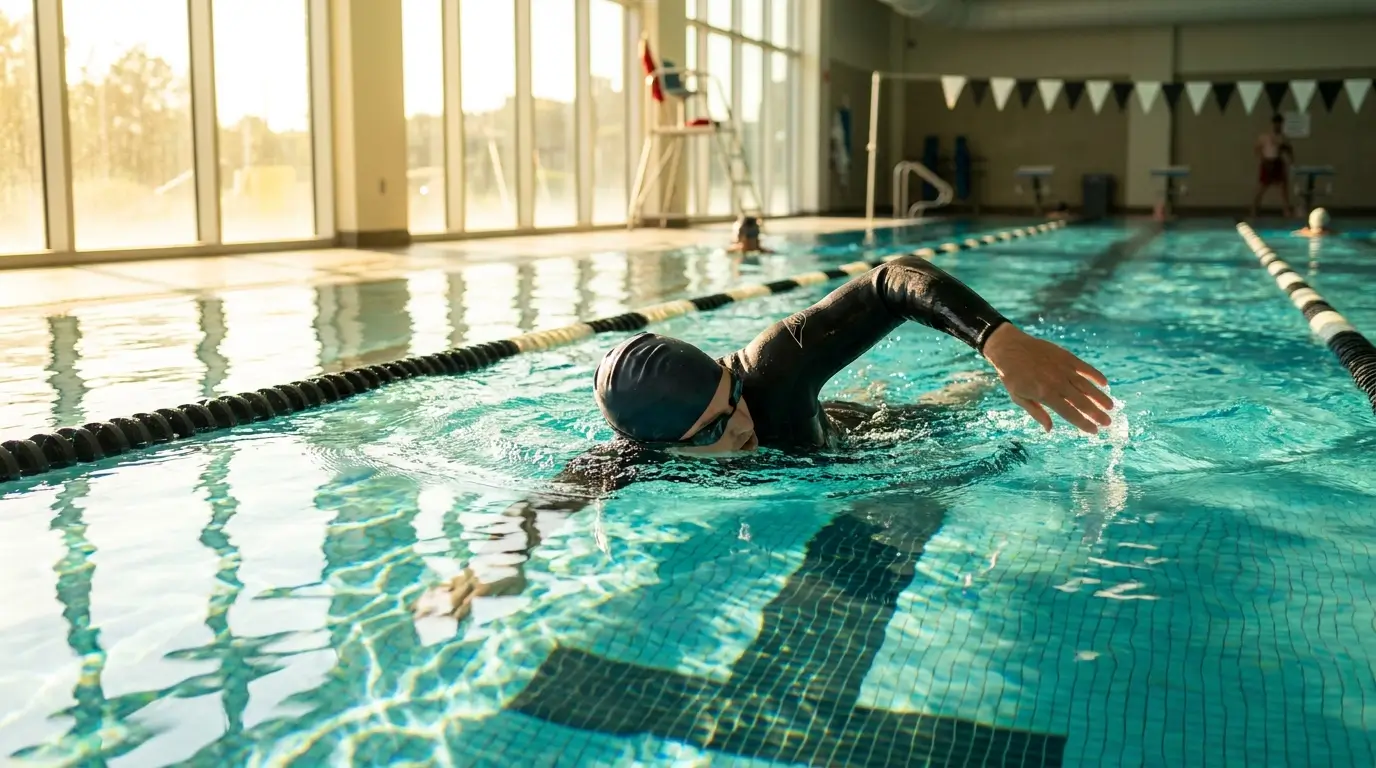
Creating a balanced workout does not require a swim coach standing over you with a clipboard and a whistle. The best easy conditioning routines for recreational swimmers rely on simple patterns that you can memorize before you even put your cap on. Easy Conditioning Routines for Recreational Swimmers You want to split your main workout into manageable chunks rather than swimming continuous laps for forty-five minutes straight. Breaking things down keeps your mind sharp and maintains your form.
A classic setup uses fifty-yard blocks, which is exactly two lengths of a standard pool. You can swim four of these blocks at a moderate pace, taking a twenty-second rest at the wall after each one. Easy Conditioning Routines for Recreational Swimmers Focus on keeping your stroke count identical for every single length you swim. This simple structure builds muscular endurance without pushing you into an anaerobic panic where your technique completely falls apart.
If you want to stretch your distance, increase the blocks to one-hundred-yard swims with thirty seconds of rest. The magic of this approach is that you are secretly accumulating serious yardage without the mental exhaustion of a long, unbroken swim. Easy Conditioning Routines for Recreational Swimmers Your shoulders will thank you for the brief pauses, which allow lactic acid to drain before you push off for the next round.
Step 3: Integrating Kickboard and Pull Buoy Sets for Muscle Balance
Grabbing gear from the communal bin at the end of the lane is a great way to isolate your weaknesses. Recreational swimmers often struggle with heavy legs that drag through the water like anchors. Easy Conditioning Routines for Recreational Swimmers Utilizing a basic TYR pull buoy stops this dragging immediately by floating your hips, allowing you to focus entirely on your upper body strength and pull mechanics.
Try a block of four lengths using only the pull buoy, keeping your legs squeezed together while your arms do all the work. Once you finish that, swap the buoy for a kickboard to give your upper body a break while burning out your quads and glutes. Easy Conditioning Routines for Recreational Swimmers Keep your kick small and fast rather than wide and splashy to mimic your natural stroke. Using swimming training aids this way prevents shoulder fatigue while ensuring your core stays active throughout the entire session.
Make sure you keep your head down when using the kickboard to avoid neck strain. Sinking your face into the water and lifting it only to breathe keeps your spine aligned, just like normal swimming. Easy Conditioning Routines for Recreational Swimmers Many recreational swimmers make the mistake of holding their heads high above the board, which arches the back and defeats the purpose of the core engagement.
Step 4: Structuring Intervals to Build Cardiovascular Stamina
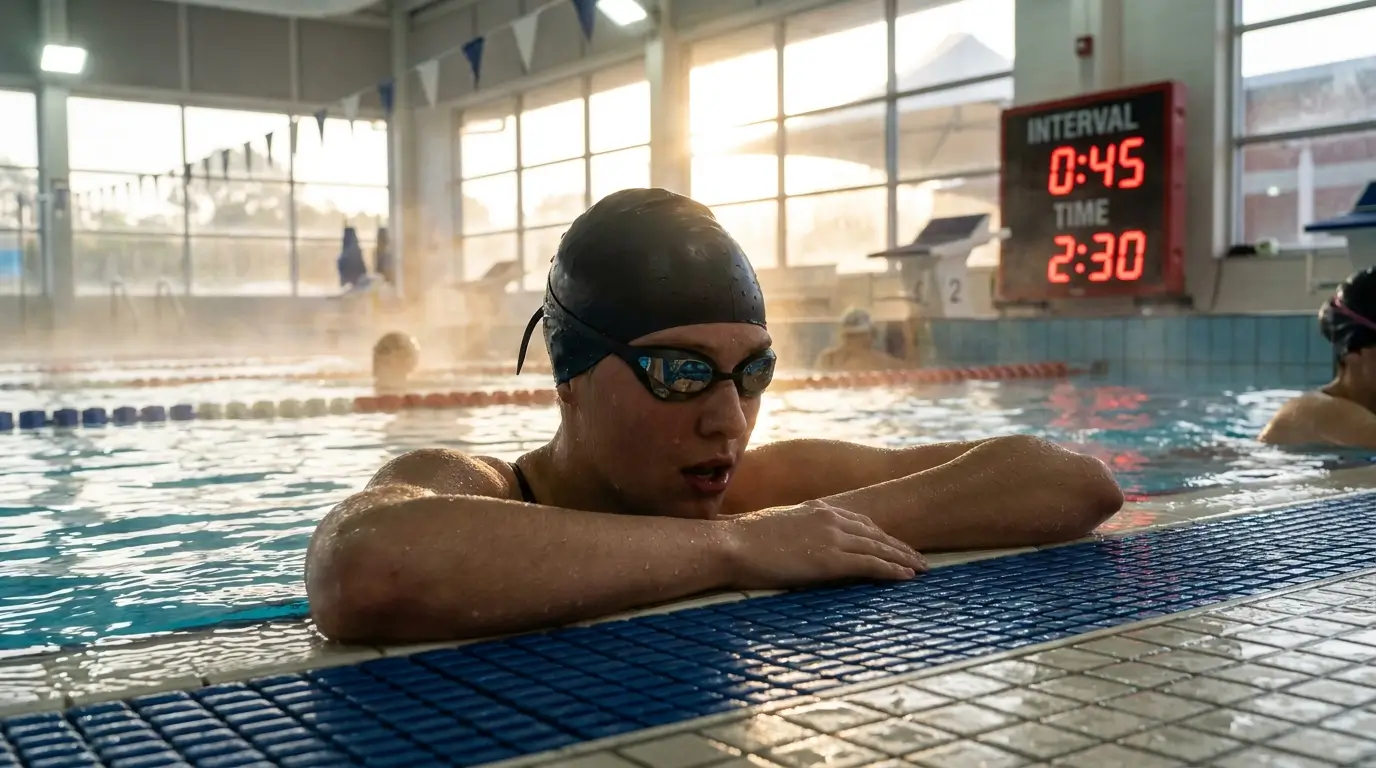
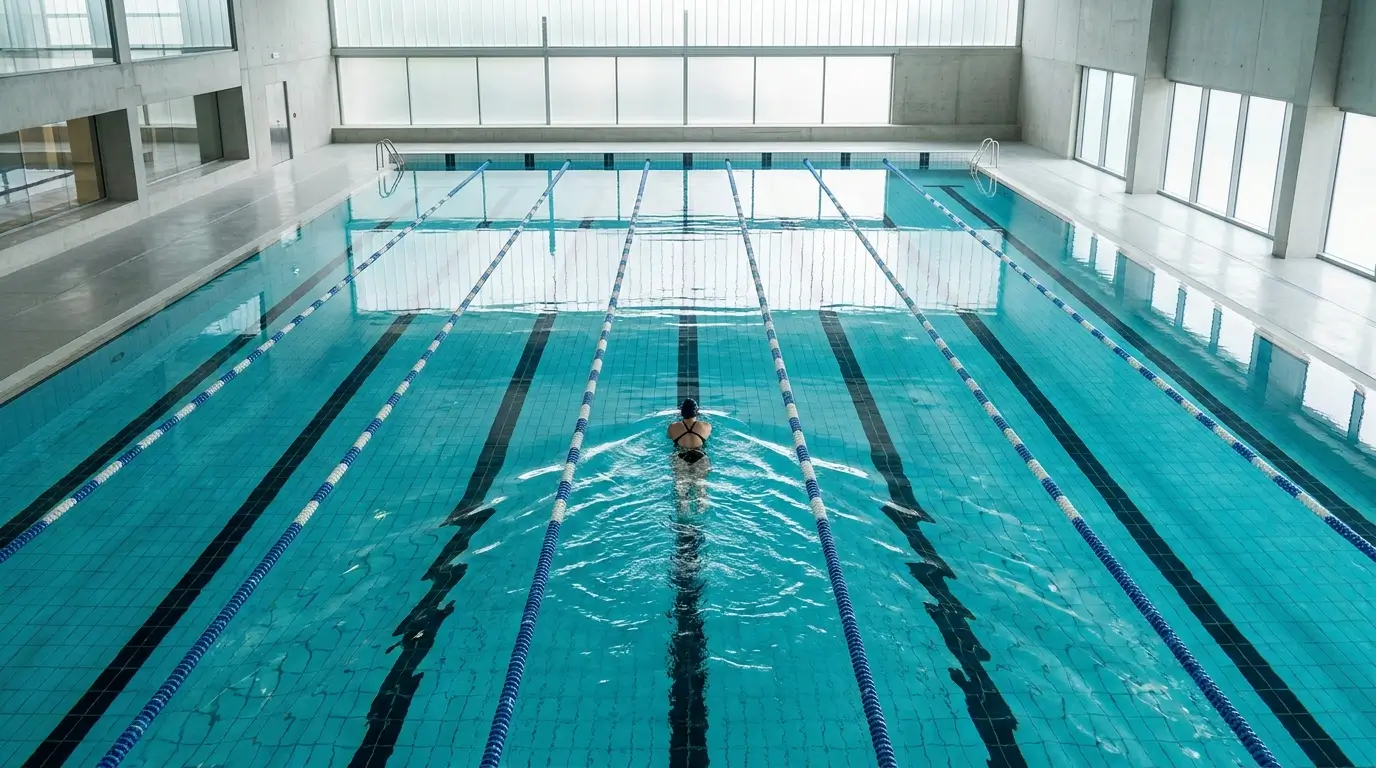
Pacing yourself is the hardest part of swimming, especially when you are trying to improve your overall fitness. Many people sprint the first lap and then spend the next twenty minutes struggling just to survive. Easy Conditioning Routines for Recreational Swimmers Instead, you should use the pace clock on the pool wall to guide your recovery times. This structured rest is what separates true conditioning from casual splashing.
You do not need to calculate complex swim times to benefit from interval training. Simply swim one length at a fast effort, then rest for thirty seconds before repeating the process. Try to complete six of these fast lengths, maintaining the same high level of energy on the final lap as you did on the first. This method naturally improves your aerobic capacity by allowing your heart rate to spike and recover repeatedly.
If you do not have a clear view of the wall clock, count your breaths instead. Taking ten deep, slow breaths at the wall after a hard length serves as an excellent natural timer that automatically scales to your current fitness level. Easy Conditioning Routines for Recreational Swimmers As your lungs get stronger, your breathing rate will slow down, naturally shortening your recovery periods and pushing your conditioning further.
Step 5: Incorporating Dryland Core Work to Protect Your Shoulders
Most pool progress actually happens on dry land where you can build the stability that water cannot easily provide. Easy Conditioning Routines for Recreational Swimmers A weak core forces your lower back to arch, which drops your hips and puts extra pressure on your shoulders. Spending just ten minutes on a yoga mat before or after your swim session can fix this structural issue.
Focus on movements that build stability rather than dynamic twisting. Planks and side planks are incredibly effective because they mimic the rigid body position you need to maintain while rotating through the water. Easy Conditioning Routines for Recreational Swimmers I personally love the dead bug exercise because it teaches your limbs to move independently while your lower back remains flat against the floor. Doing these movements twice a week will make your body feel significantly lighter when you finally get back into the pool.
You can also add a few repetitions of resistance band external rotations to safeguard your shoulders. These simple movements target the tiny rotator cuff muscles that stabilize your joint as your hand enters the water. Easy Conditioning Routines for Recreational Swimmers Keeping these muscles healthy means you can swim longer sessions week after week without the nagging aches that often plague casual athletes.
Step 6: Tracking Your Progress Without Getting Obsessive
While wearing a high-tech Garmin swim watch is fun, you do not need loads of data to know if you are getting fitter. Easy Conditioning Routines for Recreational Swimmers True progress for recreational athletes shows up in how comfortable you feel during your third or fourth lap. If you can breathe easily and maintain a long stroke, these easy conditioning routines for recreational swimmers are doing their job.
Also Read: Foolproof Endurance Training Plans for Triathlon Beginners 2026
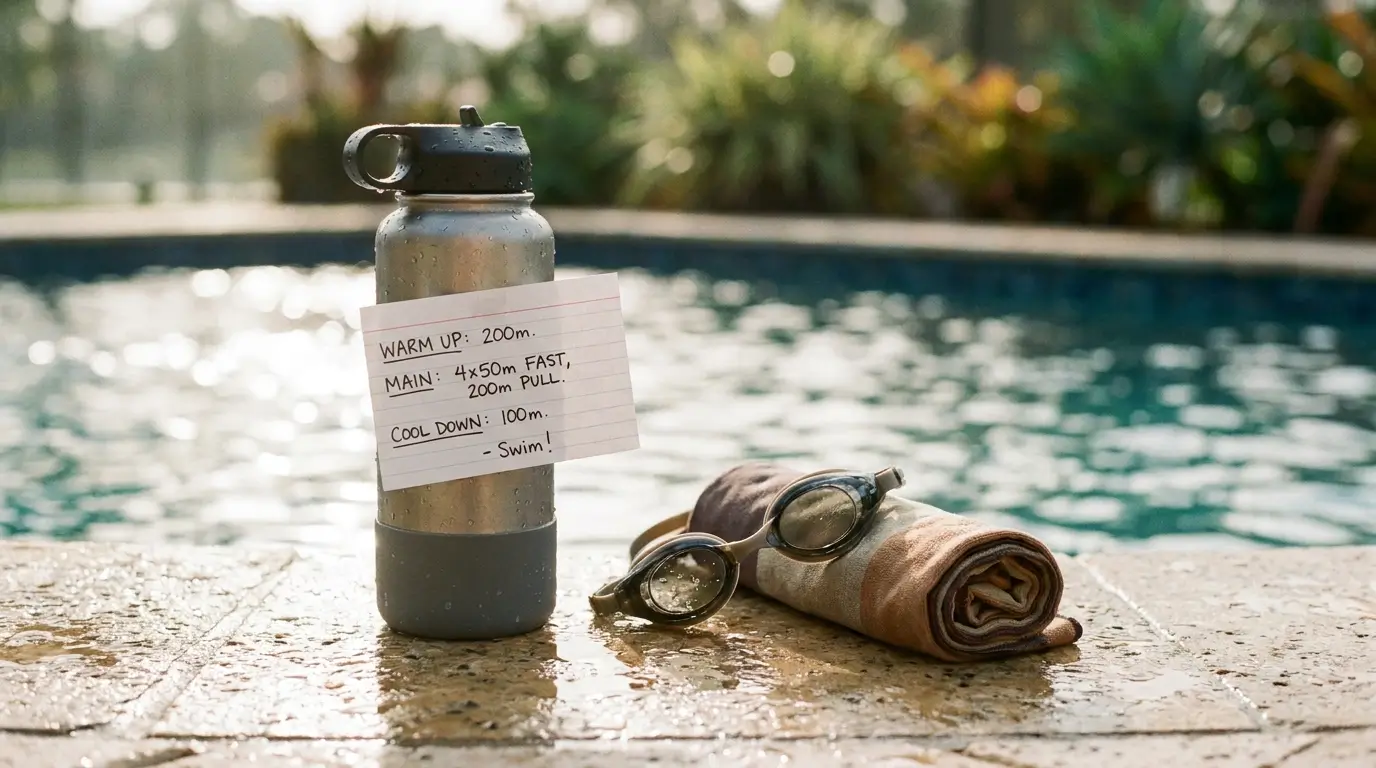
Write down your basic workouts on a small index card and stick it to your water bottle using a splash of pool water. Note how many rests you took and how your shoulders felt during the session. Easy Conditioning Routines for Recreational Swimmers Over a month, you will notice that you need less rest between your fifty-yard intervals to feel fully recovered. This consistent progress tracking keeps you motivated without turning a healthy hobby into a stressful data analysis project.
Do not feel discouraged if some days feel heavier than others. Poor sleep, hydration levels, and daily stress all show up in your swimming pool performance. Easy Conditioning Routines for Recreational Swimmers Treating your swim as a practice rather than a test allows you to enjoy the process of slowly building your stamina over time.
FAQs
How many times a week should I swim for fitness?
Aiming for two to three sessions weekly is perfect for staying fit. This consistency allows your muscles to adapt and build endurance without risking overtraining. If you only go once a week, you might find yourself restarting the conditioning process every time you jump back in.
Do I need to know flip turns to get a good workout?
Not at all. Simply touching the wall, taking a quick breath, and pushing off strong is completely fine. Focus on your streamlined body position when leaving the wall rather than worrying about complex flips that might just exhaust you or hurt your nose.
What are the best easy conditioning routines for recreational swimmers who are short on time?
Try a simple twenty-minute ladder workout. Swim one lap and rest, then swim two laps and rest, going up to four laps before working your way back down. This keeps your mind occupied and naturally packs a lot of quality yardage into a very tight schedule.
Which swim stroke burns the most calories?
Butterfly is the absolute king of calorie burning, but it is incredibly tough to maintain. For consistent conditioning, a mix of freestyle and backstroke is your best bet. This combination keeps your heart rate elevated while balancing the muscle groups in your shoulders and upper back.
How do I prevent my goggles from fogging up?
A quick drop of baby shampoo rubbed on the inside of the lenses and rinsed out works wonders. You can also purchase commercial anti-fog sprays like Spit. Avoid touching the inside of your goggles with your fingers, as skin oils instantly destroy the anti-fog coating.
Conclusion
Conditioning in the pool does not have to feel like preparation for the Olympics. By structuring your swims with simple intervals and using basic gear, you can build incredible stamina while keeping things highly enjoyable. What is your favorite stroke to use when you want to pick up the pace during a workout?
One comment on “Easy Conditioning Routines for Recreational Swimmers 2026”