








Finding no-fail rehab exercise plans for post injury athletes is the only thing on your mind when you are stuck on the sidelines watching your team run drills. No-Fail Rehab Exercise Plans for Post Injury Athletes I spent months in this frustrating limbo after tearing my meniscus last spring. Healing is never a straight line, but you can take total control of your athletic recovery starting right now.
Phase 1: Cool the Fire with Controlled Mobilization
First things first, total bed rest is a relic of the past. When I tore up my knee, my surgeon practically forced me out of bed the very next morning. No-Fail Rehab Exercise Plans for Post Injury Athletes Your body requires movement to flush out waste products and bring fresh, oxygenated blood to the damaged tissue. This phase is about gentle, non-weight-bearing motion that respects your pain limits.
Instead of lying completely still, we use active recovery pathways. Think ankle pumps, light calf stretches, or even upper body training to keep your cardiovascular system active while your injury settles down. No-Fail Rehab Exercise Plans for Post Injury Athletes You can use compression sleeves from brands like Incrediwear to manage joint swelling without freezing the healing process. FYI, the old RICE protocol has evolved into PEACE and LOVE, which prioritizes movement and circulation over constant, aggressive icing. Keep the movement slow, controlled, and pain-free to build momentum for the harder work ahead.

Phase 2: Reclaim Your Lost Range of Motion
Once the acute throbbing subsides, you must fight for your joint mobility. Scar tissue acts like glue, binding up healthy muscle fibers and limiting how your joints bend. No-Fail Rehab Exercise Plans for Post Injury Athletes Crafting no-fail rehab exercise plans for post injury athletes requires a strict focus on symmetrical movement before adding heavy external weights. If your injured knee only bends ninety degrees while your healthy one bends one hundred and forty, you have no business loading it with a barbell.
Also Read: Quick Mobility Routines for Muscle Strain Recovery 2026
Use a simple strap, like the OPTP Stretch Out Strap, to guide your joints through their full range without forcing the movement. Spend ten to fifteen minutes twice a day performing passive slides on the floor or wall. No-Fail Rehab Exercise Plans for Post Injury Athletes Your nervous system will try to guard the area by tightening up, so use deep, slow breathing to signal to your brain that it is safe to let go. Rebuilding joint mobility is tedious, but rushing past this step guarantees a secondary compensation injury down the road.
Phase 3: Wake Up Sleepy Muscle Groups with Isometrics
Brain to muscle miscommunication is the silent enemy of every recovering lifter or runner. After trauma, your body actively shuts down surrounding muscles to prevent further damage, a frustrating biological trick called neuromuscular inhibition. No-Fail Rehab Exercise Plans for Post Injury Athletes After my joint injury, my quad looked like a deflated balloon and refused to flex no matter how hard I tried. Isometrics are the key to rebuilding those neural pathways without irritating your joints.
Hold static contractions for ten to thirty seconds at a time. Squeeze your quads against a rolled up towel, perform wall sits at a comfortable angle, or hold a plank to engage your core stability. No-Fail Rehab Exercise Plans for Post Injury Athletes Because your joints do not move during isometric holds, the risk of reinjury is incredibly low. Do these exercises daily to wake up those sleeping fibers so they can support you when we start moving through full ranges of motion again.
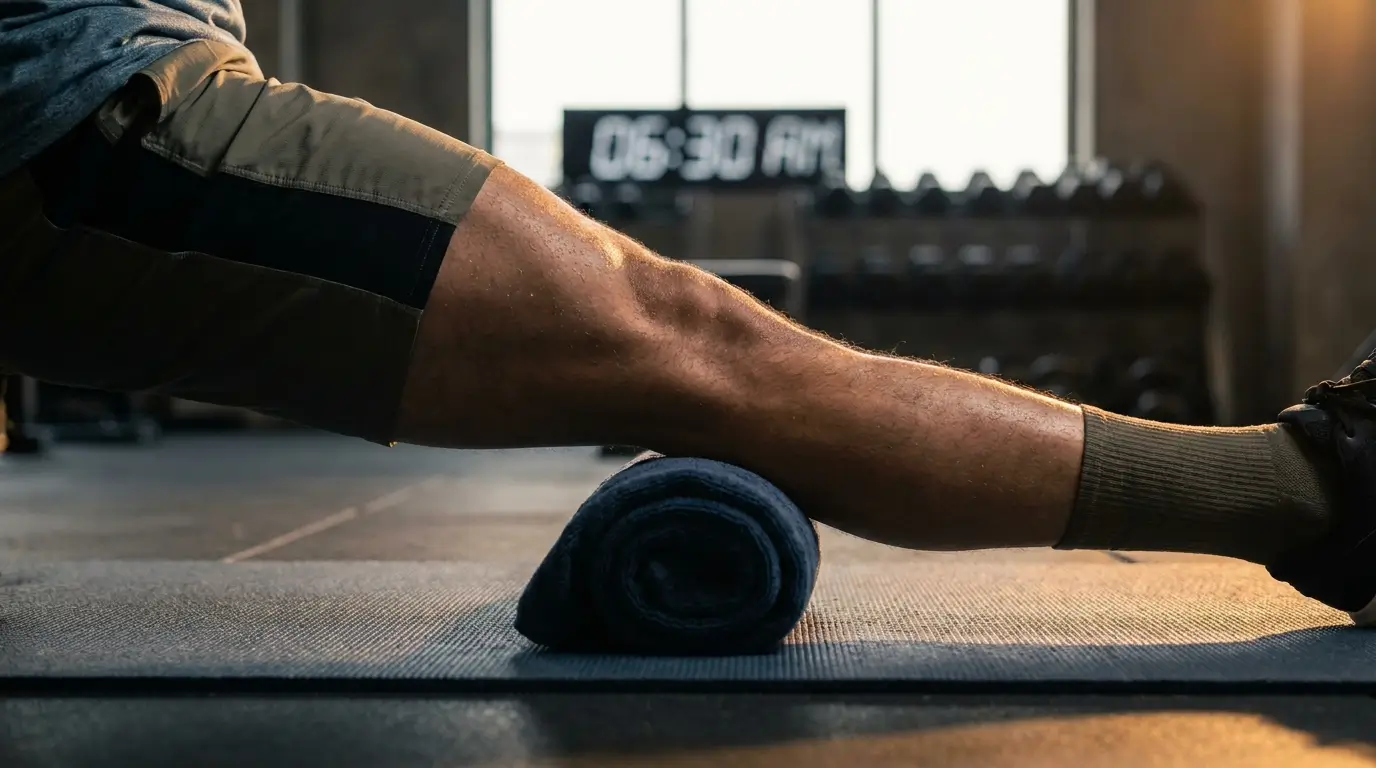
Phase 4: Customizing No-Fail Rehab Exercise Plans for Post Injury Athletes
Transitioning back to active lifting means focusing heavily on the eccentric phase of your movements. The eccentric phase is the lowering portion of an exercise, like descending into a squat or lowering a dumbbell. No-Fail Rehab Exercise Plans for Post Injury Athletes Research shows that slow, controlled eccentric work rebuilds tendon density and muscle fibers far better than explosive movements. It forces your tissues to adapt to tension, which is exactly what they need to withstand the chaos of your sport.
Start by using a tempo of four seconds down and one second up. Use lighter weights, perhaps forty percent of your pre-injury maximum, and focus entirely on perfect execution. No-Fail Rehab Exercise Plans for Post Injury Athletes If you are rehabbing a shoulder, slow tempo dumbbell presses or eccentric pull-ups will trigger massive structural repair. Do not let your ego dictate the weight on the bar during this phase. This is where we lay the foundation of absolute tissue resilience.
Phase 5: Reintroducing Balance and Proprioception
Sanding down the rough edges of your balance prevents future disasters on the field. Injury damages your proprioceptors, which are the tiny sensors in your joints that tell your brain where your limbs are in space. No-Fail Rehab Exercise Plans for Post Injury Athletes Many templates fail here, but no-fail rehab exercise plans for post injury athletes must include neurological training to rebuild this spatial awareness. Without it, you are basically playing sports with a laggy internet connection.
Try standing on one leg while throwing a tennis ball against a wall, or close your eyes during simple single-leg stands to force your ankles to react. No-Fail Rehab Exercise Plans for Post Injury Athletes Using a Bosu ball or a Slackline can challenge your deep stabilizing muscles to fire rapidly. Perform these exercises when you are slightly fatigued to simulate the end of a hard game. Rebuilding proprioception is what keeps you from rolling that ankle again the first time you step on an uneven patch of grass.

Phase 6: Graduating to Sport-Specific Plyometrics
Running in a straight line is easy, but cutting and jumping require a whole different level of physical preparation. This phase introduces rate of force development, which is your body’s ability to explode and absorb impact. You cannot just jump back into competition without teaching your muscles how to handle rapid deceleration forces. We start with low-impact plyometrics and work our way up to max-effort movements.
Begin with double-leg box jumps, focusing on a soft, quiet landing. Once you master the landing, progress to single-leg hops and lateral bounding to mimic the side-to-side demands of your sport. Keep your repetitions low, around five to eight per set, because we want maximum quality and explosive power rather than cardiovascular fatigue. Always warm up thoroughly with dynamic stretches before starting these high-intensity sessions to prevent sudden setbacks.
Phase 7: The Mental Transition to Play
Physical readiness means absolutely nothing if you are terrified of taking a hit or making a sharp turn. This mental block is known as kinesiophobia, and it is the primary reason many athletes never return to their peak performance. IMO, the psychological barrier of recovery is often higher than the physical one, requiring conscious effort to overcome. You have to rebuild trust in your body slowly by exposing it to chaotic environments.
Start practicing with your team in non-contact drills before jumping into full scrimmages. No-Fail Rehab Exercise Plans for Post Injury Athletes Wear your normal gear, practice on your actual playing surface, and let your mind adapt to the speed of the game. Visualizing successful movements during your downtime also helps rewire your brain for success. Once you conquer the fear of reinjury, your movements will become fluid and natural again, leaving the injury firmly in your past.

Frequently Asked Questions
How do you know if you are pushing too hard during rehabilitation?
Listen closely to your joint pain. No-Fail Rehab Exercise Plans for Post Injury Athletes If your pain spikes above a three out of ten during an exercise, or if you experience throbbing swelling that lasts more than twenty-four hours after training, you have crossed the line. Back off the intensity, focus on mobility, and let the tissue recover before ramping up again.
Can you build muscle while recovering from an athletic injury?
Absolutely, and you should. While you cannot load the injured area heavily, you can train your unaffected limbs to maintain overall fitness. No-Fail Rehab Exercise Plans for Post Injury Athletes Interestingly, training your healthy leg can actually prevent strength loss in your injured leg through a neurological phenomenon known as cross-education. Keep lifting on your good side to stay strong.
What is the biggest mistake when starting no-fail rehab exercise plans for post injury athletes?
The most common error is rushing back to pre-injury weights too quickly. No-Fail Rehab Exercise Plans for Post Injury Athletes Your ligaments and tendons heal much slower than muscle tissue, so lifting heavy before they are ready leads to chronic setbacks. Consistency and slow progressions will always get you back on the field faster than trying to make up for lost time.
Should I use heat or ice for chronic post-injury stiffness?
Use heat to loosen up stiff muscles and joints before your workout sessions. Heat increases blood flow and tissue elasticity, making movement much easier. No-Fail Rehab Exercise Plans for Post Injury Athletes Save the ice for post-workout soreness or acute swelling, but try to limit it to fifteen minutes so you do not completely stall your body’s natural healing response.
How long does it realistically take to return to competitive sports?
It depends entirely on the severity of the injury and your dedication to the protocol. Soft tissue strains might take four to six weeks, while ligament reconstructions can require nine to twelve months. Focus on hitting functional milestones, like symmetry and impact tolerance, rather than staring at a calendar date.
Conclusion
Rebuilding your body after an injury takes serious grit, but a structured approach ensures you will step back onto the field stronger than before. No-Fail Rehab Exercise Plans for Post Injury Athletes Be patient with your progress and remember that every small win counts toward your ultimate return. What sport are you fighting to get back to right now?


One comment on “No-Fail Rehab Exercise Plans for Post Injury Athletes 2026”