




Finding time for quick strength workouts for amateur cyclists can feel like trying to climb a steep grade in the wrong gear. You want to ride, not spend your rare free hours lifting heavy iron inside a stuffy gym. But building a resilient body does not require a massive time commitment. Let us look at how you can build real, on-the-bike power using minimal equipment right at home.
The Power of Quick Strength Workouts for Amateur Cyclists
I used to believe that the only way to get faster on a bike was to spend more hours spinning my legs. Whenever my lower back screamed on a steep climb, I assumed I just needed more saddle time. Eventually, a physical therapist friend pointed out that my glutes were completely asleep and my core had the structural integrity of wet cardboard. That wake-up call forced me to rethink my entire training approach. Adding structured, off-bike sessions changed everything for me, and it did not require sacrificing my weekend group rides.
Investing in quick strength workouts for amateur cyclists builds a foundation that prevents your posture from collapsing when fatigue sets in during a long ride. When you stabilize your pelvis and strengthen your legs, every pedal stroke becomes more efficient. You stop wasting energy swaying side to side, sending all that generated force straight into your drivetrain instead. Best of all, you can get these benefits in under twenty minutes without buying a single gym membership.
Step 1: Activate the Glutes with Single-Leg Bridges
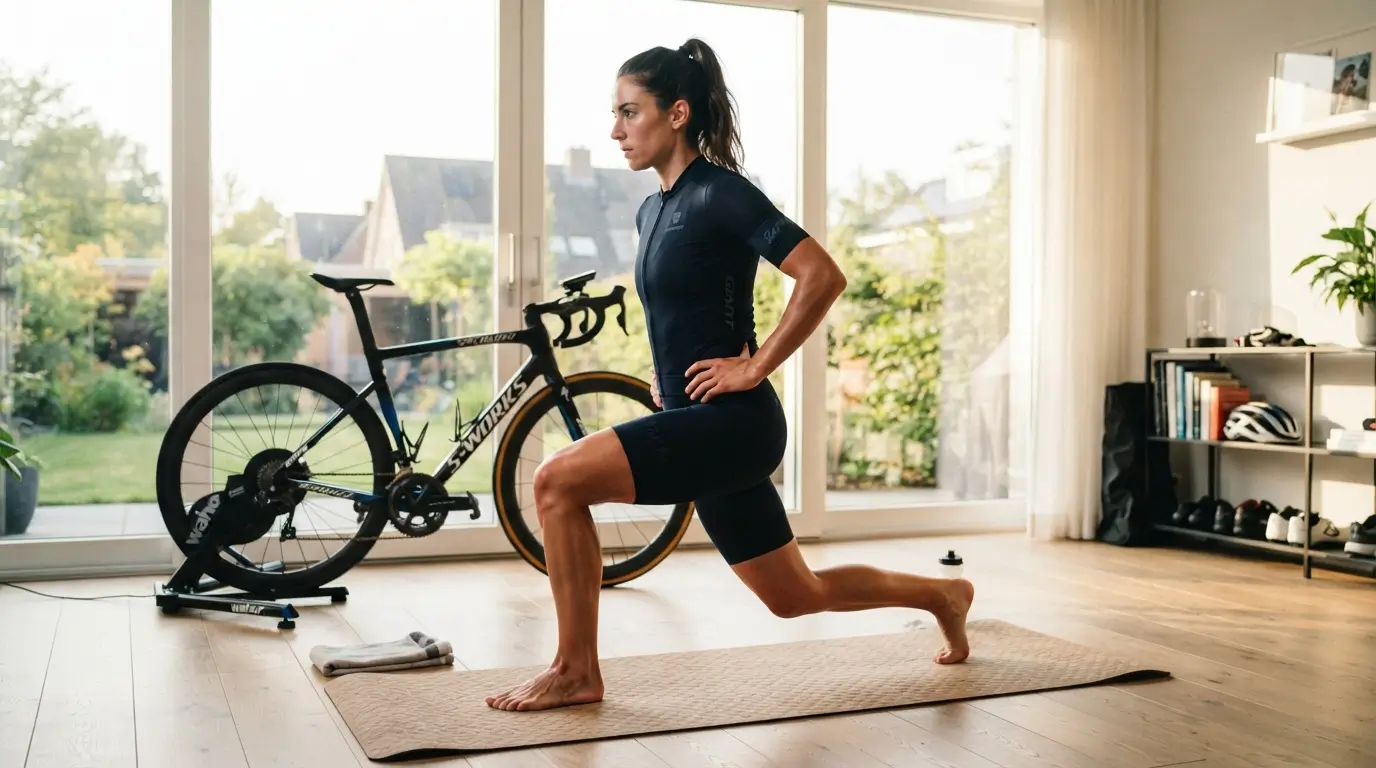
Many of us sit at a desk all day before jumping on the saddle, which leads to dead glutes. If your butt muscles are asleep, your quads and lower back have to do all the heavy lifting on the road. Single-leg glute bridges are my absolute favorite way to wake up these sleepy powerhouse muscles before a ride or during a quick home session.
Also Read: Easy Fitness Plans for Ten Minute Breaks 2026
To do them right, lie on your back with your knees bent and feet flat on the floor, about hip-width apart. Lift one leg straight out in front of you, then drive through the heel of your opposite foot to hoist your hips toward the ceiling. Squeeze your glute at the very top of the movement for a full two seconds, making sure your hips do not tilt or sag. I highly recommend keeping your hands on your hip bones during this movement to monitor your alignment. Perform three sets of ten reps per side, focusing entirely on a slow, controlled tempo rather than rushing through the movements.
Step 2: Master the Goblet Squat for Quad and Hip Drive
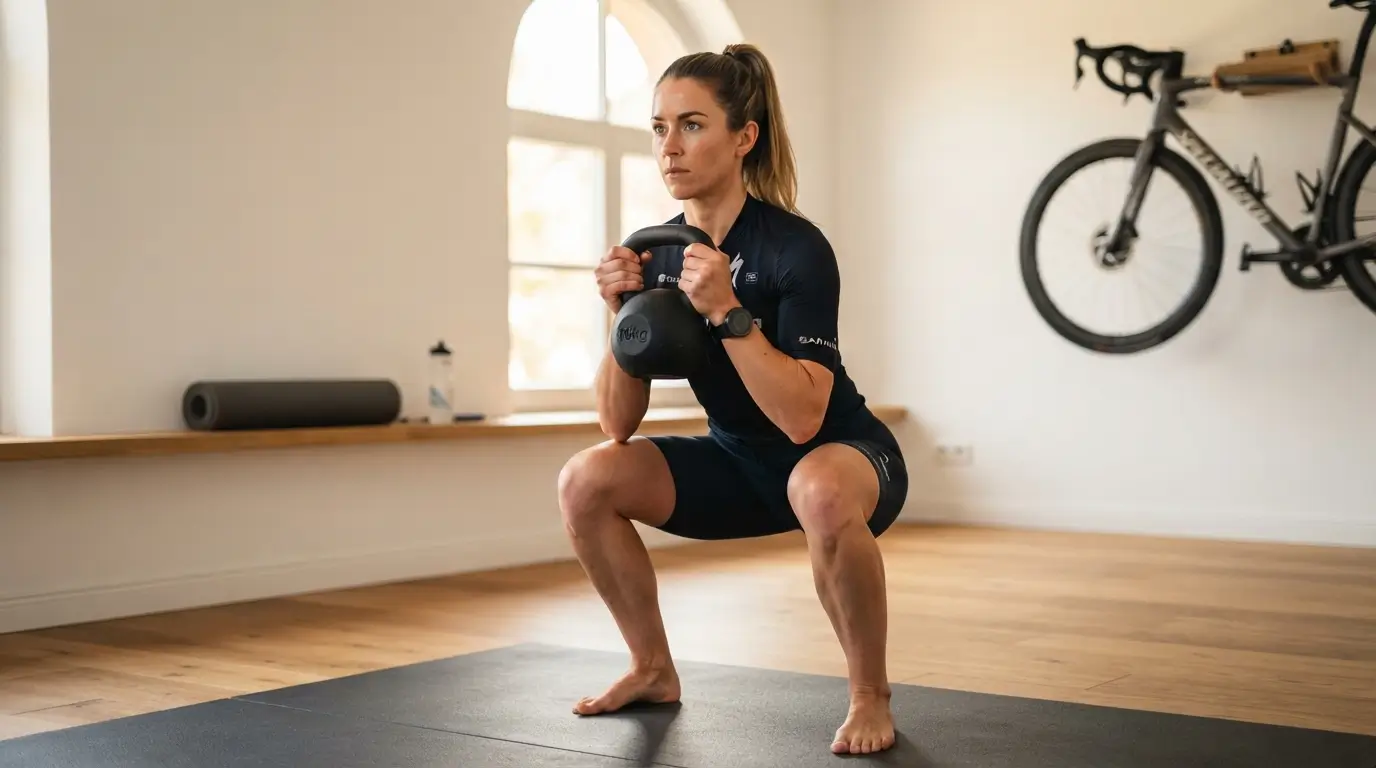
Squats are the ultimate functional movement for cycling, mimicking the exact push-and-pull dynamic of your pedal stroke. Holding a single dumbbell or kettlebell at your chest during a goblet squat forces your core to stay upright, protecting your lower spine. Adding quick strength workouts for amateur cyclists to your weekly routine, like these weighted squats, builds the deep leg strength required to power through tough headwinds and punchy climbs.
Hold your weight close to your breastbone, keeping your elbows tucked down toward your ribs. Stand with your feet slightly wider than shoulder-width, toes turned out just a fraction, and sit back as if you are lowering yourself into a low chair. Keep your chest high and drive your knees outward so they track directly over your toes. Go down until your thighs are parallel to the floor, pause briefly to eliminate momentum, and drive back up to a standing position. I like to imagine pushing the floor away from me with my feet, which keeps the engagement squarely in the thighs and glutes.
Step 3: Train Single-Leg Balance with Bulgarian Split Squats
Cycling is fundamentally a single-leg sport, which is why bilateral exercises like traditional squats are not quite enough. One side of your body is almost always stronger than the other, and the bike has a sneaky way of hiding these imbalances. Bulgarian split squats isolate each leg, forcing your stabilizers to work overtime and correcting those strength discrepancies before they lead to knee pain.
Find a sturdy chair, sofa, or bench and stand about two feet in front of it, facing away. Reach one foot back and rest the top of your foot on the flat surface of the bench behind you. Lower your hips until your back knee is hovering just an inch above the floor, ensuring your front knee does not slide too far past your toes. Drive back up through your front heel, keeping your torso tall and your hands on your hips to maintain a solid balance. It is a brutal exercise that burns almost instantly, but the stability it provides to your knees on the bike is unmatched.
Step 4: Protect Your Spine with the Renegade Row
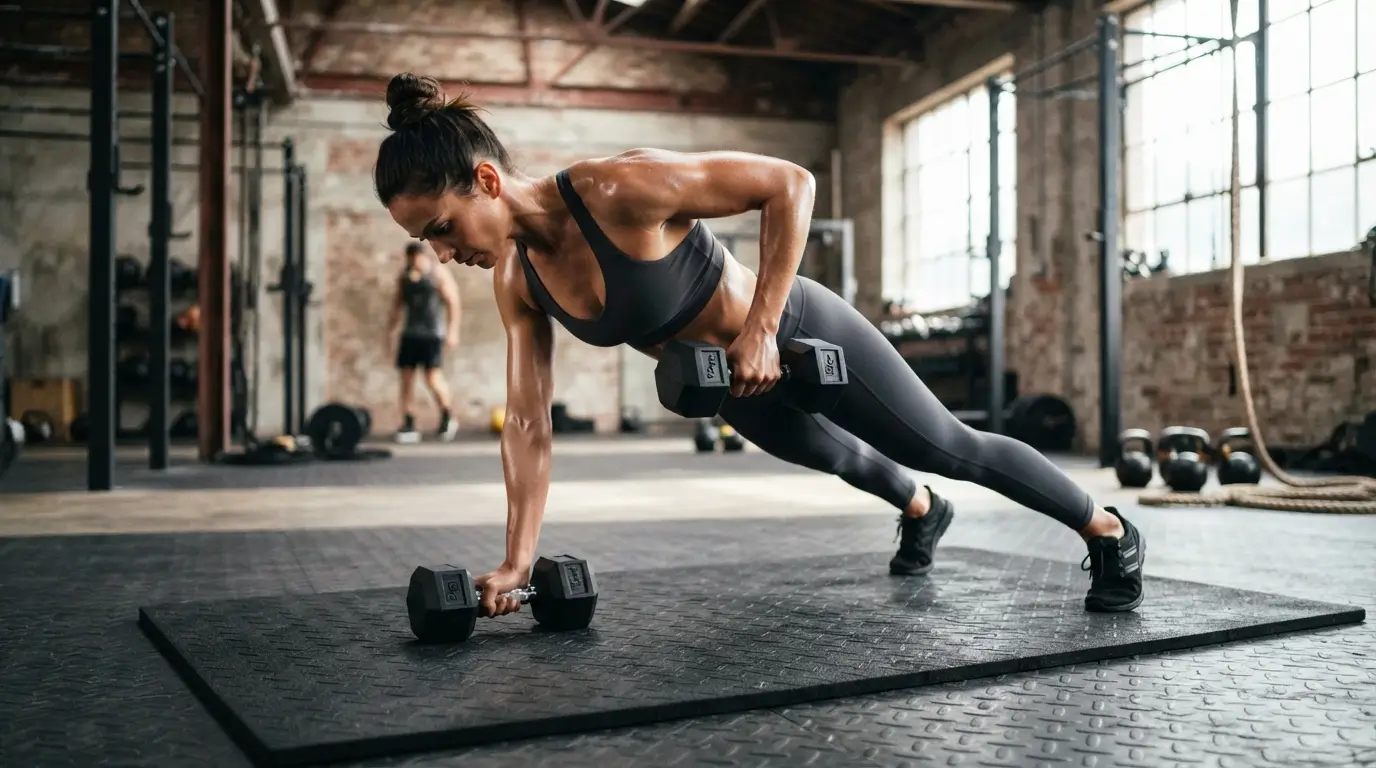
Most amateur riders completely ignore their upper body, but holding yourself up for four hours on a road bike requires immense endurance. Your core, shoulders, and upper back act as the platform that your legs push against to generate power on the road. The renegade row is a fantastic multi-tasking movement that targets your upper back while forcing your abdominal muscles to fight rotation.
Get into a push-up position with your hands gripping a pair of hex dumbbells resting flat on the floor. Keep your feet set wider than normal to establish a sturdy base, then pull one weight up toward your hip while keeping your elbow tucked close to your ribcage. Lower the weight slowly back to the floor, then repeat the motion on the opposite side. The secret here is to keep your hips completely parallel to the ground throughout the exercise. If your hips start rocking like a boat in a storm, reduce the weight immediately or drop down to your knees to maintain proper form.
Step 5: Hold Your Line with the Side Plank and Leg Raise
When you get tired late in a race or a long weekend ride, your knees might start bowing outward or rubbing against the top tube. This lateral movement is a major cause of IT band friction and chronic knee issues in cyclists. Side planks with an added leg raise directly target the gluteus medius, which is the muscle responsible for keeping your knees tracking straight.
Prop yourself up on your elbow with your legs straight and stacked directly on top of each other, forming a straight line from your head to your heels. Lift your hips off the ground, then slowly raise your top leg toward the ceiling without letting your hips sag down toward the floor. Hold that top position for a brief second before lowering your leg back down with total control. If this feels too difficult at first, you can bend your bottom leg to ninety degrees to shorten the lever arm. Aim for thirty seconds of continuous movement on each side to build the endurance your hips need for long-distance comfort.
How to Structure and Schedule Your Training Week
Fitting these exercises into a busy riding schedule does not require a complex plan or massive lifestyle changes. You only need to perform these quick strength workouts for amateur cyclists two times a week to see noticeable improvements in your power and comfort. I highly recommend scheduling these short sessions on your recovery days or immediately after a light, easy spin. This strategy allows your legs to fully recover before your high-intensity intervals or long, epic weekend group rides.
Begin with a basic circuit structure, performing each of the five movements back-to-back with minimal rest in between. Complete ten reps of each exercise, rest for two minutes, then repeat the entire sequence for three total rounds. Keeping the pace brisk ensures you get a mild cardiovascular benefit while keeping your total gym time under twenty minutes. As you get stronger, you can gradually increase the weight or add a fourth round to keep challenging your muscles. Consistency is far more important than intensity here, so focus on showing up twice a week rather than trying to lift as heavy as possible.
Frequently Asked Questions
How often should I do quick strength workouts for cyclists?
Aiming for twice a week is the sweet spot for maintaining leg power and core stability. Keeping these sessions under twenty minutes makes them incredibly easy to stick with. Schedule them on your rest days or light riding days so your legs stay fresh for your weekend club rides.
Do I need heavy weights to build cycling power?
Absolutely not. Bodyweight exercises and light resistance from dumbbells or kettlebells are more than enough to build stability and endurance. Your main goal is correcting muscle imbalances and strengthening your joints, which does not require maximum-effort barbell lifting at a commercial gym.
Can these off-bike routines help prevent lower back pain?
Yes, they are highly effective for back issues. Cyclists often suffer from back pain because their core muscles fatigue, forcing the spine to absorb all the vibration and pressure. Strengthening your glutes and core relieves that stress, allowing you to ride comfortably for hours.
What is the best time of day to train?
Consistency matters far more than the clock. Some riders prefer doing their routines first thing in the morning to wake up their muscles, while others like wrapping up an easy evening ride with a quick session. Choose whatever time fits smoothly into your daily routine.
Can I do these strength routines during the racing season?
Maintaining your strength during the peak riding season is critical for staying injury-free on the road. You can reduce the volume to just one session a week during high-mileage months to keep your legs fresh. This simple maintenance routine protects your joints without draining your energy.
Conclusion
Building a stronger body off the bike does not have to feel like a second job. By committing to these short, focused movements twice a week, you will build the core stability and leg power needed to crush your local climbs with ease. What is your absolute favorite exercise to keep your body feeling fresh during a long ride?