








If you spend most of your day hunched over a laptop or phone, beginner friendly mobility drills for stiff shoulders might be the only thing standing between you and a genuinely pain-free morning. I ignored my tightness for years until reaching overhead felt like a personal betrayal. These five simple moves changed everything for me, and they take less than ten minutes total.
Warm Up With Wall Slides
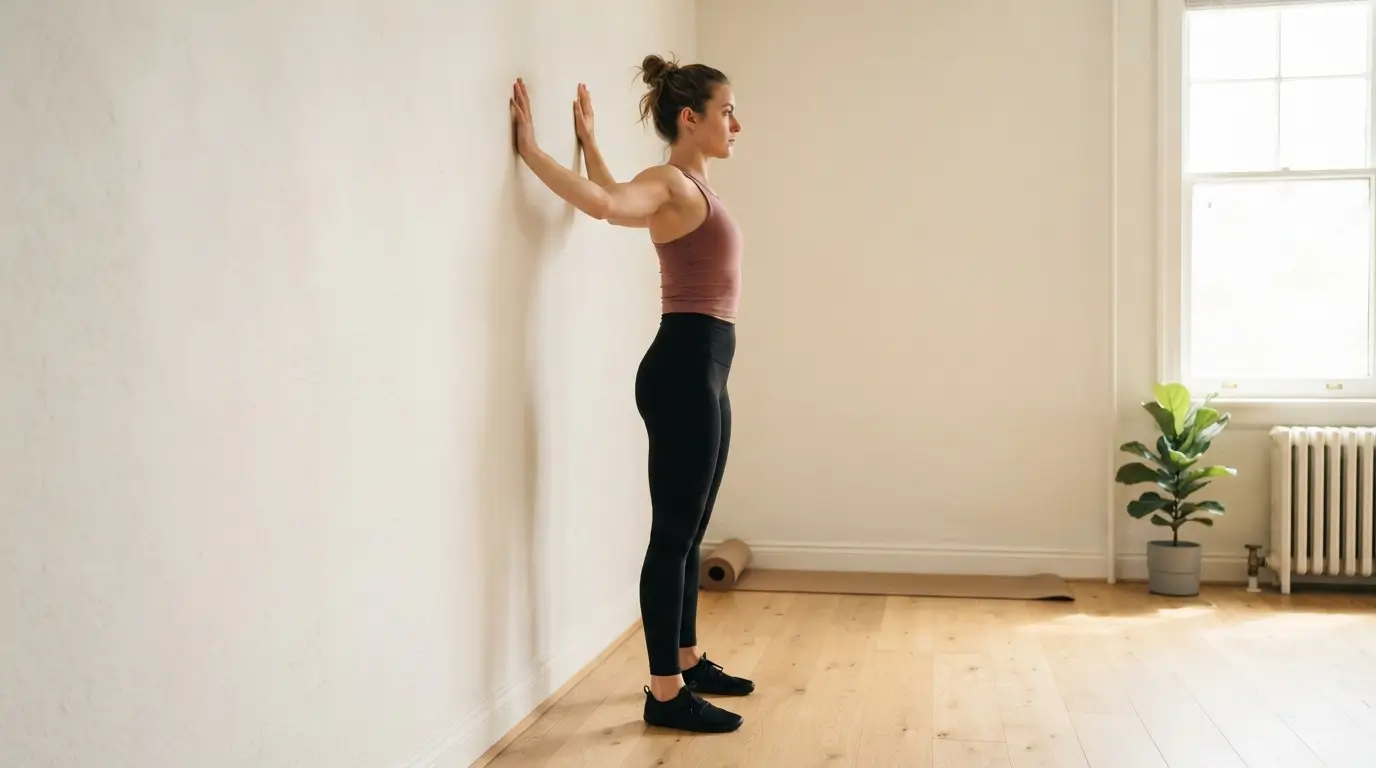
Stand facing a wall with your forearms flat against it, elbows bent at ninety degrees and positioned at shoulder height. Slowly slide your hands upward while keeping your lower back pressed firmly into the wall. The goal is to reach as high as you can without your ribs flaring out or your back arching away from the surface. Most people only manage a few inches at first, and that is completely normal. I remember feeling ridiculous the first time I tried this because my arms barely moved past my ears despite thinking I had decent flexibility from years of casual gym work.
Do ten slow reps and focus on maintaining contact with the wall the entire time. This move wakes up your scapular stabilizers, which are probably asleep from eight hours of desk work. Wall slides set the tone for every other drill in this routine, so do not skip them even when you are short on time. Think of them as the warm-up your shoulders actually need before asking them to do anything else.
Open Your Chest With the Doorway Stretch
Find any doorframe and place your forearm against it at a ninety-degree angle, elbow slightly above shoulder height. Step one foot forward and gently rotate your torso away from the arm until you feel a deep stretch across your chest and the front of your shoulder. Hold for thirty seconds on each side and resist the urge to bounce. The biggest mistake I made for months was cranking my arm too high and too far back, which just pinched the front of my joint instead of actually stretching the pec. Keep the angle moderate and breathe slowly into the stretch.
Your pectoral muscles get incredibly tight from typing, scrolling, driving, and basically every modern habit we have, and this simple move undoes a surprising amount of that accumulated damage. Do two rounds per side and pay attention to any asymmetry. One side will almost always feel tighter than the other, and that is useful information for tracking your progress. If you work at a desk, try doing this stretch during your lunch break for a quick reset.
Restore Rotation Using Thread the Needle
Get on all fours with your hands directly under your shoulders and knees under your hips. Take your right arm and slide it underneath your left arm, reaching across the floor until your right shoulder and the side of your head rest on the ground. Hold for twenty to thirty seconds, then switch sides. This drill targets your thoracic spine and the deep rotators around your shoulder blade, two areas that get absolutely locked down from prolonged sitting.
Also Read: Simple Flexibility Plans for Desk Job Employees 2026
The first time I did this, I could barely get my shoulder to the floor and my back felt like a brick wall. After about three weeks of daily practice, the difference was honestly night and day. Keep your hips stacked over your knees and resist the urge to collapse your lower back toward the floor. Thread the needle is one of the most effective beginner friendly mobility drills for stiff shoulders you can do at home with zero equipment. I usually do this one right after my wall slides while I am already on the floor.

Strengthen Weak Muscles With Prone Y-Raises
Lie face down on the floor with your arms extended overhead in a Y shape, thumbs pointing toward the ceiling. Lift both arms a few inches off the ground by squeezing your shoulder blades together and down toward your back pockets. Hold the top position for two full seconds, then lower slowly with control. Aim for eight to ten reps per set. This one looks deceptively easy but burns fast because it targets your lower trapezius, a muscle most people completely neglect in their training.
Weak lower traps are a huge reason your shoulders feel stiff and achy in the first place, especially if you carry tension in your neck. Your upper traps take over everything, and the imbalance creates chronic tension that no amount of stretching will fix on its own. I do these every morning on my living room rug before breakfast. Keep your forehead resting on the ground so you do not strain your neck during the lift. Two sets is plenty when you are starting out, and you will feel these in places you did not know could get sore.
Decompress Everything With Dead Hangs
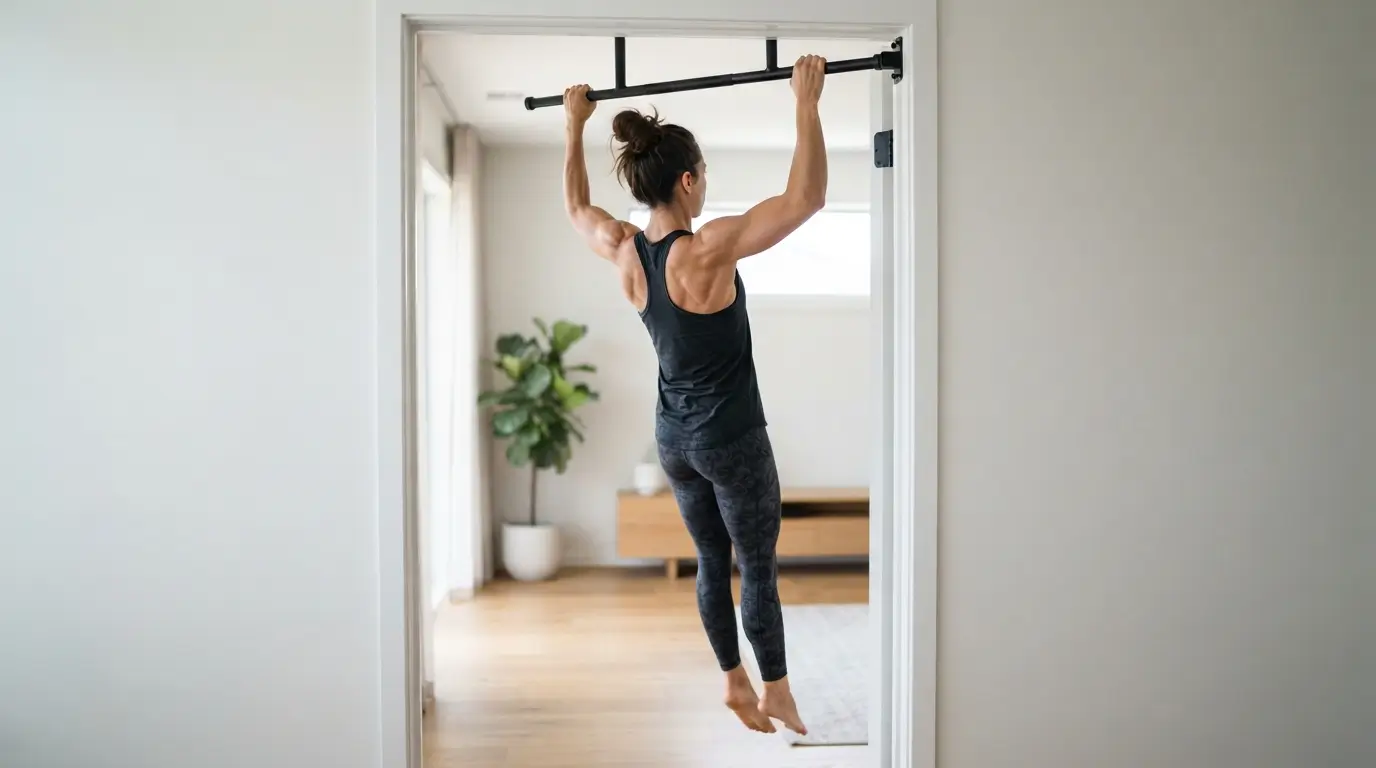
Grab a pull-up bar or any sturdy overhead structure and just hang there. Let your body go completely limp, relax your grip slightly, and let gravity do all the heavy lifting for you. Start with fifteen to twenty seconds and gradually build up to a full minute over a few weeks. Dead hangs create space in your shoulder joint, decompress your spine, and stretch your lats all at the same time. I hung from my doorframe pull-up bar every evening for a month before I noticed my overhead range of motion actually improving in a measurable way.
The key is to relax into the hang rather than gripping the bar for dear life like you are about to fall off a cliff. If a full dead hang feels too intense right now, keep your toes lightly touching the floor to reduce the load while your grip and shoulder strength catch up. A cheap doorway pull-up bar from Amazon works perfectly fine for this and costs about twenty dollars. The decompression feeling after a good hang is honestly one of the best sensations you will experience all day.
Beginner Friendly Mobility Drills for Stiff Shoulders: Your Daily Routine
Now that you know each individual move, here is how I stack them into a daily flow that actually sticks for the long haul. Start with ten wall slides to warm up the joint and get blood moving. Move into two rounds of doorway stretches per side, holding each rep for thirty seconds. Follow that with thread the needle, thirty seconds per side, breathing deeply into the stretch. Finish with eight prone Y-raises and a twenty to thirty second dead hang.
The whole thing takes about eight to ten minutes, and I do it every single morning before my first cup of coffee while the kettle boils. Consistency matters far more than intensity here. You will not fix years of stiffness in one session, but you will feel noticeably looser within two weeks if you stick with it. I track my overhead reach in a notes app on my phone, and watching that number improve keeps me motivated on the days I would rather skip the whole thing. These beginner friendly mobility drills for stiff shoulders are not flashy or exciting, but they genuinely work.

FAQs
How often should I do shoulder mobility drills?
I do mine every morning, but even four times a week will get you solid results. The key is consistency over intensity. Five minutes daily beats a thirty-minute session once a week. Your shoulders stiffen up again overnight, so frequent short sessions keep the progress going and prevent backsliding.
Can I do these drills if I have a shoulder injury?
If you have a diagnosed injury like a rotator cuff tear or impingement, talk to a physical therapist before starting any new routine. These moves are gentle, but pain is always your signal to stop immediately. Modify the range of motion and skip anything that causes sharp or shooting discomfort in the joint.
How long until I notice a real difference?
Most people feel looser after the first week, but meaningful range of motion changes take about three to six weeks of consistent practice. I noticed my overhead reach improving around week three. Be patient and trust the process instead of pushing harder to speed things up. Your body adapts faster than you think once you give it a consistent stimulus.
Do I need any equipment for these beginner friendly mobility drills for stiff shoulders?
Almost nothing at all. A wall, a doorframe, and the floor cover most of the routine. The only optional piece is a pull-up bar for dead hangs, and you can skip that move entirely if you do not have one. A basic yoga mat adds comfort for the prone Y-raises.
Should I stretch before or after working out?
These mobility drills work great as a warm-up before lifting or as a standalone routine on rest days. I prefer doing them in the morning before any exercise because they prep my joints for the day ahead. Save deeper static stretching for after your workout when your muscles are already warm.
Conclusion
Your shoulders did not get stiff overnight, and they will not loosen up in a single session either, no matter how hard you push or how badly you want it to happen fast. Stick with these moves daily, keep the intensity low, and let your body catch up at its own pace. What is the one drill you are most excited to try first?




One comment on “Beginner Friendly Mobility Drills for Stiff Shoulders 2026”