







Finding simple flexibility plans for desk job employees saved my sanity when my lower back started screaming at two in the afternoon every single workday. Sitting in a cheap office chair for eight hours slowly destroys your mobility, turning your hamstrings and hip flexors into stiff guitar strings. You do not need an hour of yoga to fix this mess, just small, consistent daily movements.
Assess Your Stiffest Problem Zones
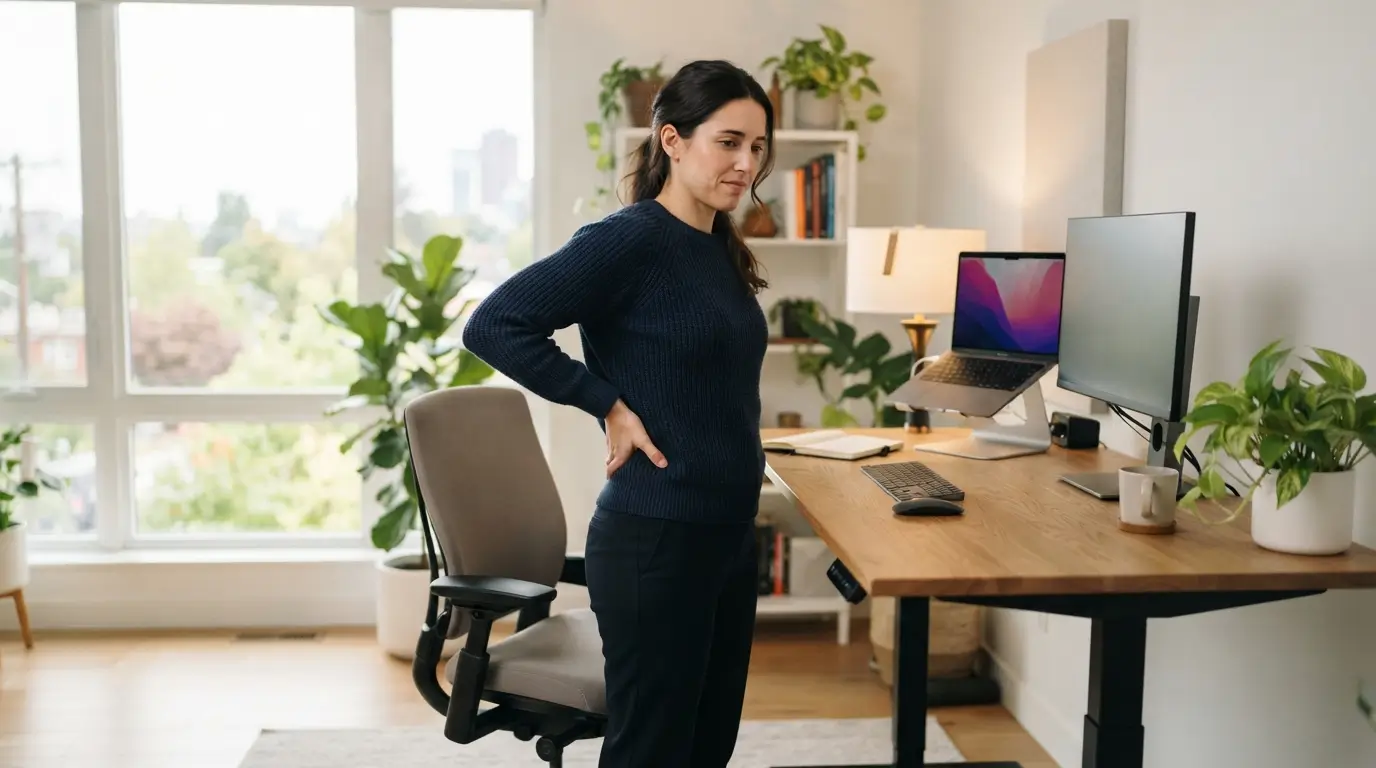
Most office workers jump straight into aggressive stretching routines without knowing which muscles actually cause the tension. Sitting down shortens your hip flexors, shuts off your glutes, and forces your upper spine to round forward into an unnatural hunch. When you stand up, your shortened hip muscles tug on your lower back, causing dull aches that feel like spinal issues when they are actually muscular imbalances.
This mechanical imbalance creates an anterior pelvic tilt, where your pelvis spills forward like a bowl of water and jams your lumbar joints together. Why do tight hip flexors cause so much trouble in the lower back? Because your body compensates for locked hips by forcing your lumbar spine to bend in places where it should stay stable.
Before starting any routine, check your body for these classic warning signs:
- Soreness across your lower back when standing up from your desk
- Dull aches in your neck and the tops of your shoulders after typing
- Pinching sensations in the front crease of your hips during squats
- Hamstrings that feel perpetually tight no matter how often you bend over to touch your toes
Avoid the common mistake of aggressively stretching your lower back when it feels tight. Your back muscles are often already overstretched and weak from sitting rounded all day. Target the front of your hips and your chest first, because releasing those shortened areas gives your back muscles an immediate chance to recover.
Set Up a Two-Minute Morning Spine Sequence
Start your daily routine before you ever sit down in your chair or begin your morning commute. Your spinal discs absorb fluid while you sleep, which makes your back slightly stiffer during the first hour after waking up. A gentle morning mobility sequence warms up the joints, pumps fresh synovial fluid around your vertebrae, and prepares your body for hours of sitting without causing sudden strain.
Also Read: Easy Stretching Routines for Tight Hip Flexors 2026
Begin on all fours on a comfortable rug to perform ten slow rounds of the classic cat-cow stretch. Inhale as you drop your belly and look up toward the ceiling, then exhale as you push the floor away and round your shoulder blades toward the sky. Focus on moving one vertebra at a time rather than rushing through the motion.
Transition directly into a kneeling side reach to improve your thoracic spine mobility, which locks up faster than almost any other area when you lean over a keyboard. Kneel tall, place one hand on the floor beside you, and reach the opposite arm up and over your head in a long arc. Hold for two deep belly breaths, switch sides, and repeat three times per side to open your ribcage and lats before breakfast.
Run the Midday Chair Reset Every Ninety Minutes
Set a subtle recurring timer on your phone or smartwatch to nudge you every ninety minutes. You do not need to drop to the floor in the middle of a busy office to keep your joints healthy. A few discreet, seated movements performed right at your desk relieve pressure on your sciatic nerve and restore circulation to your legs before stiffness settles in permanently.
Cross your right ankle over your left knee to form a figure four shape, keeping your right foot flexed to protect your knee joint. Sit tall with a straight spine, place your hands lightly on your shin, and hinge forward from your hips until you feel a deep stretch in your outer hip and glute. This seated figure-four stretch targets the piriformis muscle, which compresses the sciatic nerve when you sit on it for hours at a time.
Hold that position for thirty seconds while taking slow breaths, then switch legs. Follow this with a seated torso rotation by placing your right hand on the outside of your left thigh and gently turning your shoulders toward the left. Rotate from your upper ribs rather than your lower back, IMO the most common error that ruins an otherwise great desk stretch. Hold for twenty seconds, rotate to the right side, and return to typing with instant relief in your mid-back.

Execute Simple Flexibility Plans for Desk Job Employees at Lunch
Lunch breaks give you a dedicated ten-minute window to step away from your monitor and stand tall. Following simple flexibility plans for desk job employees during midday breaks keeps blood circulating and prevents afternoon brain fog. You spend all morning folded in half, so spending ten minutes opening the entire front line of your body restores your posture for the second half of your shift.
Find an empty wall or sturdy chair in your breakroom to perform the couch stretch, the single most effective movement for reversing chair-bound hip stiffness. Place one knee on the floor near the base of the wall with your shin running up the wall behind you, and step your other foot out in front into a lunge. Squeeze the glute of your rear leg hard to push your hip forward until you feel an intense stretch running down the front of your thigh.
Hold this position for forty-five seconds on each leg while maintaining an upright torso. If the wall version feels too intense, prop your rear foot on a low chair or coffee table instead. Next, walk over to an open doorway, place your forearms on the doorframe at shoulder height, and take a gentle step forward until your chest opens wide. Hold for thirty seconds to counteract the slumped shoulder posture created by hours of mouse and keyboard work.
Release Tight Hip Flexors and Hamstrings in the Afternoon
Late afternoon fatigue usually causes people to slump deep into their chairs, which locks the psoas muscles into a tight bind. When sticking to simple flexibility plans for desk job employees, consistency beats intensity every single time. Releasing these muscle groups around three in the afternoon stops that familiar end-of-day fatigue from settling into your lower spine.
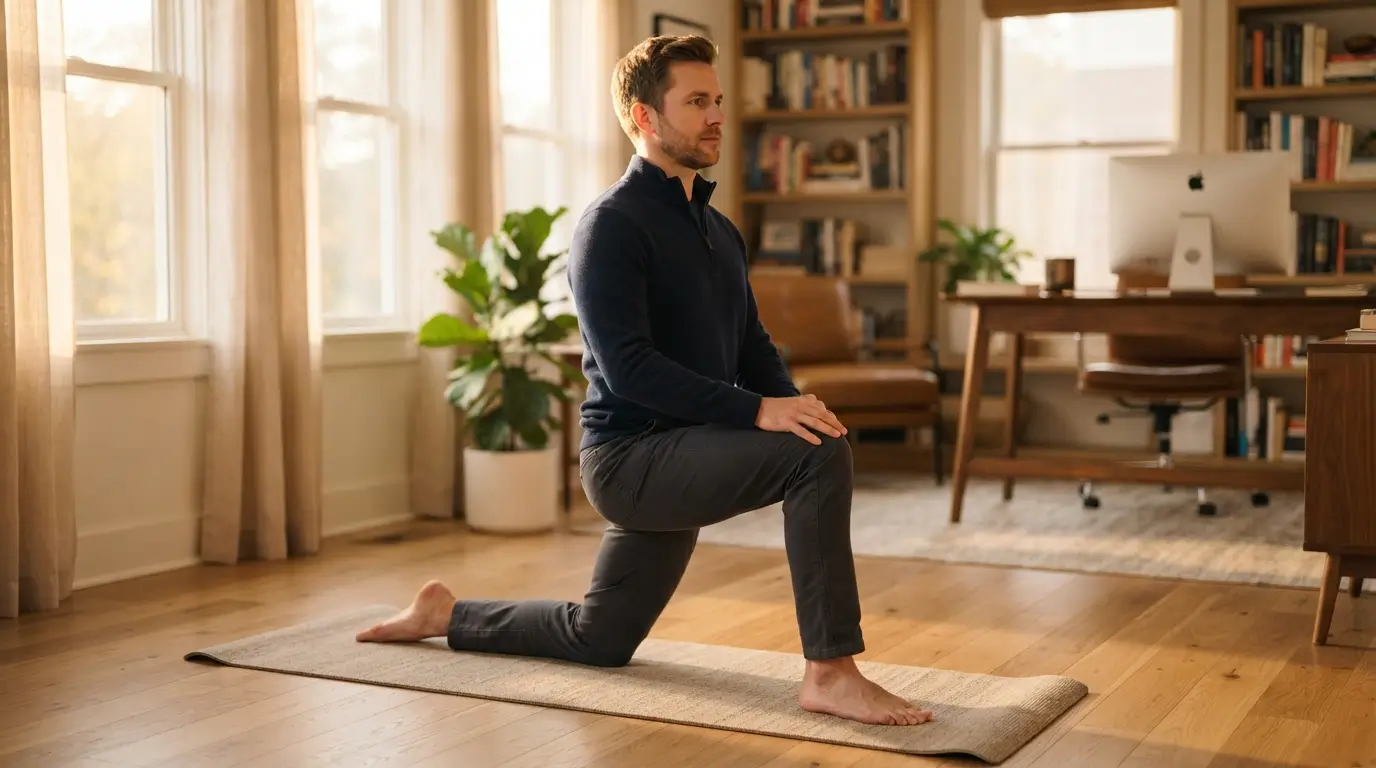
Step into a half-kneeling lunge on the floor or a cushioned mat, placing your back knee directly under your hip. Tuck your pelvis underneath your torso like a dog tucking its tail, and squeeze the glute on your rear leg. This active glute activation forces the opposing hip flexor to relax through reciprocal inhibition, giving you a much deeper release without forcing your joints into awkward angles.
Shift your weight backward, straighten your front leg, and point your toes up toward the ceiling. Hinge forward at your hip crease while keeping your back completely flat to stretch the belly of your hamstring. Avoid the urge to round your spine just to touch your toes with your fingers. Keeping your chest proud ensures the stretch hits your hamstring muscle fibers rather than straining your lower back ligaments. Hold for thirty seconds per leg.
Unwind with a Relaxing Post-Work Floor Routine
Transitioning out of work mode becomes much easier when you spend five minutes on a living room rug after five o’clock. Adopting simple flexibility plans for desk job employees works best when you anchor them to existing habits like finishing your daily email sweep. Moving down to the floor signals your nervous system to downshift from work stress into evening recovery.
Lie on your stomach and prop yourself up on your forearms for a gentle sphinx pose, keeping your glutes relaxed and your shoulders pulled away from your ears. Breathe deeply into your lower belly for one minute to encourage your lumbar spine to extend naturally after hours of seated flexion. If your back feels comfortable, press your palms into the floor and straighten your arms slightly for a deeper stretch.
Roll onto your back and set up the 90-90 hip stretch to restore internal and external hip rotation. Sit with both knees bent at ninety-degree angles, one leg in front of you on the floor and one leg trailing out to the side. Keep your torso tall and lean gently over your front shin for forty-five seconds, then rotate your knees across to the other side without using your hands for support. This movement lubricates the hip capsules and eliminates the hip clicking that desk workers often experience when walking.
Track Your Daily Joint Mobility Gains
Tracking your joint mobility progress keeps you motivated on hectic days when back-to-back video calls tempt you to skip movement entirely. You do not need expensive apps or wearable fitness trackers to measure your flexibility improvements. Simple physical benchmarks provide clear feedback on how well your body adapts to your new daily movement habits.
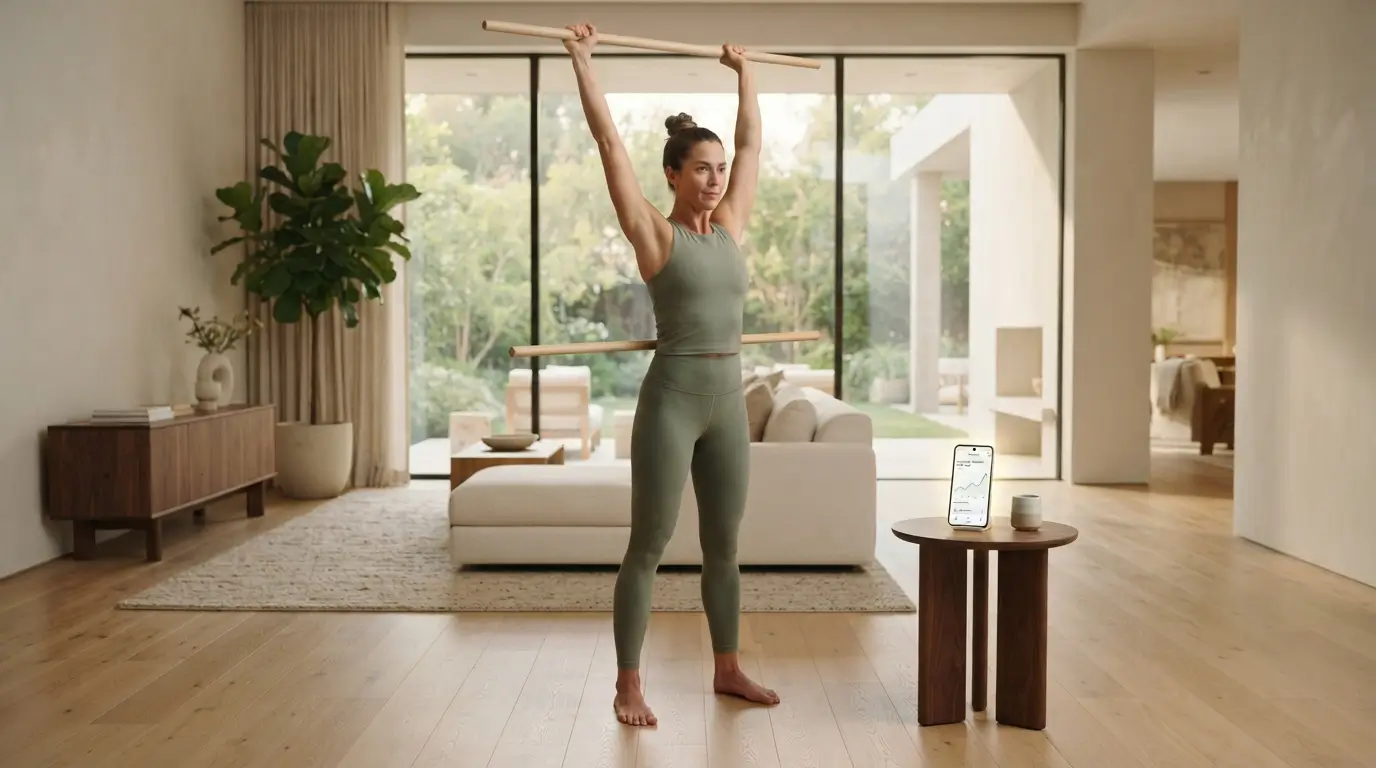
Test your shoulder range of motion once a week using a simple shoulder pass-through with a broomstick or resistance band. Hold the stick with a wide overhand grip, keep your arms straight, and bring the stick from your hips up over your head and behind your back. FYI, as your chest and shoulders loosen up over the weeks, you will naturally move your hands closer together on the stick without bending your elbows.
Pick a consistent day every week to run through these quick mobility checks:
- Measure how close your fingertips get to the floor during a relaxed standing forward fold
- Check whether you can sit tall in the seated figure-four stretch without rounding your lower back
- Notice how easily you can stand up from your desk chair without groaning or needing your armrests
- Test if your knees stay tracking straight over your toes during a deep bodyweight squat
Record your observations in a quick note on your phone. Watching your forward fold move from your shins down to your ankles over a single month proves that short, daily mobility breaks deliver far better results than occasional, brutal weekend workouts.
Frequently Asked Questions
How often should I stretch during an eight-hour workday?
Take a thirty-second movement break every hour to ninety minutes. Quick micro-breaks prevent your muscles from stiffening in a fixed position. Pair these short stand-ups with one dedicated ten-minute stretching session during lunch to maintain joint mobility throughout your shift without interrupting your daily project deadlines.
Can a simple flexibility plan for desk workers fix lower back pain?
Yes, regular mobility work frequently relieves tension by releasing tight hip flexors and hamstrings that pull your pelvis out of alignment. If your pain stems from structural issues like a herniated disc, consult a physical therapist before starting any new stretching routine to avoid aggravating existing nerve irritation.
Do I need special exercise gear or gym clothes for these routines?
No special gear is required. You can complete almost every movement in standard office attire, provided your trousers allow moderate hip movement. Keep a simple yoga mat or foam roller beside your desk at home if you prefer doing deeper floor stretches during your afternoon breaks.
How long does it take to notice better mobility?
Most office workers feel less overall stiffness within the first week of daily practice. Noticeable improvements in deep joint flexibility, hip opening, and posture typically appear after three to four weeks of consistent effort. Daily repetition matters far more than the duration of any single stretching session.
What is the biggest mistake people make with desk stretches?
Pushing through sharp joint pain instead of easing into a gentle muscle stretch is the most common error. Stretching requires calm breathing and steady holds rather than aggressive bouncing. Forcing cold muscles into extreme ranges causes defensive tightening, which defeats the entire purpose of your mobility work.
Conclusion
Building regular movement into your daily work schedule keeps your joints healthy and your energy high without sacrificing productive hours. Pick two or three stretches from this routine to test tomorrow morning, and pay attention to how your body feels by mid-afternoon. Which tight muscle gives you the hardest time at your desk right now?



One comment on “Simple Flexibility Plans for Desk Job Employees 2026”