








Finding the best flexibility routines for stiff office workers saved me from feeling like a wooden statue before lunchtime. You know that dreadful moment when you stand up after three back to back meetings and your lower back locks up completely? That dull, persistent ache in your neck is not permanent. You can easily fix your stiff joints without living on a yoga mat every single day.
The 5-Minute Morning Primer to Wake Up Stiff Joints
Rolling out of bed with a tight lower back sets a grim tone for the rest of your workday. Your body spends seven or eight hours relatively still, so cold joints naturally protest when you force them straight into an office chair. Static stretching first thing in the morning can feel jarring and ineffective on cold tissues.
Instead, start your day with dynamic mobility drills that pump blood into your spine and hips. Drop onto your hands and knees for eight slow cat-cow cycles, coordinating your breath with each spinal segment. Follow that with the half-kneeling world’s greatest stretch to open your ankles, calves, hip flexors, and chest in one smooth movement. IMO, spending just five minutes flowing through these dynamic shapes will wake up your nervous system better than an extra cup of black coffee.

Designing the Best Flexibility Routines for Stiff Office Workers During the Workday
Sitting in a thousand-dollar ergonomic chair will not save your body if you remain frozen in the same posture for eight hours straight. Static ergonomics only support passive posture; they do not counteract muscle shortening. The best flexibility routines for stiff office workers focus on frequent, small doses of movement instead of exhausting marathons.
Aim for movement frequency by moving for two minutes every hour rather than grinding out a single hour of stretching on Sunday evening. Set a silent reminder on your computer using apps like Stand Up! or a basic timer. Stand up, roll your shoulders backward, take a few deep belly breaths, and shake out your limbs. These micro-sessions reset tissue length before your muscles adapt to being folded into chair shapes all afternoon.
The Desk-Side Hip Flexor and Glute Release Sequence
Tight hip flexors act like short rubber cords that constantly yank your pelvis forward while you type. When your hip flexors shorten from prolonged sitting, your glutes turn off, forcing your lower back to handle unwanted shear forces. You need to open the front of your hips while simultaneously lengthening your glutes.
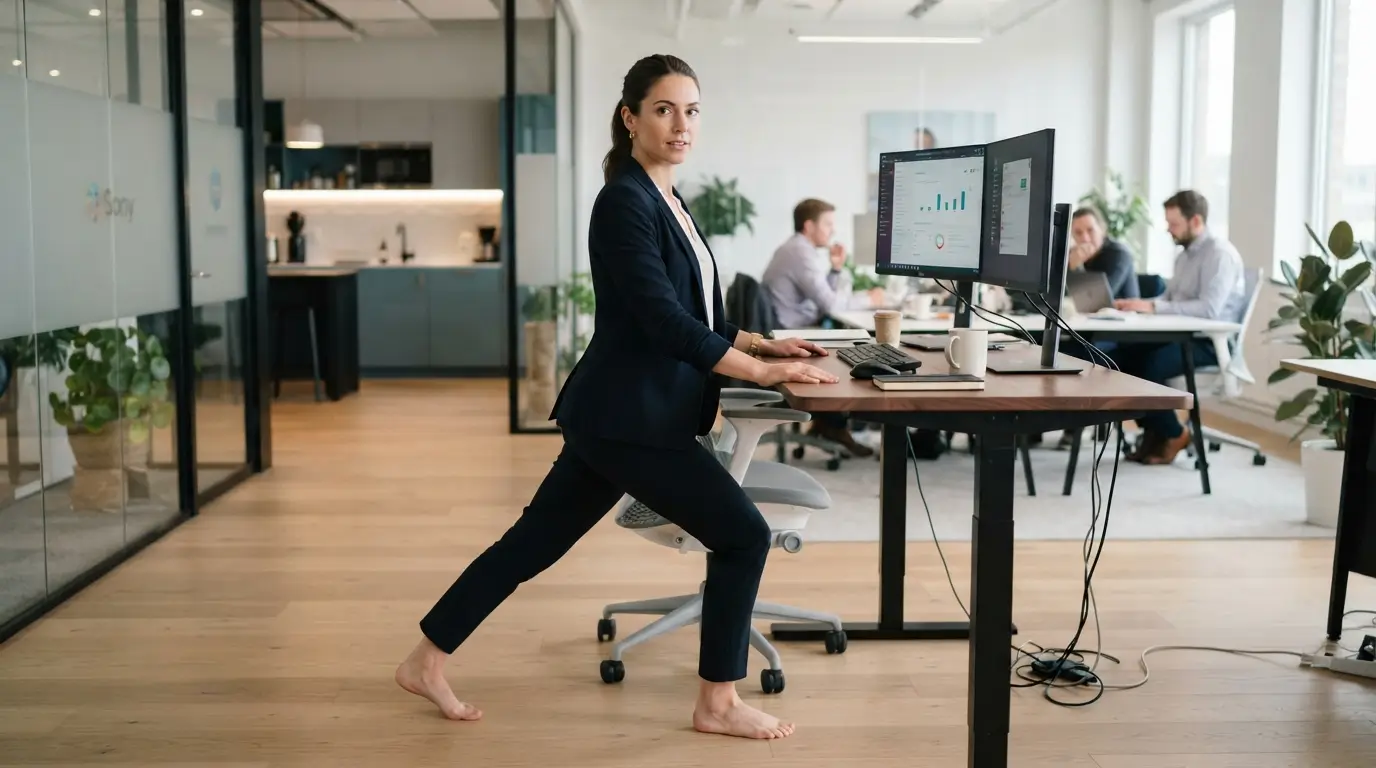
Step into a shallow lunge right beside your desk and focus on creating a slight posterior pelvic tilt by tucking your tailbone underneath your hips. Squeeze the glute of your rear leg until you feel a clean, sharp stretch across the front of your hip and thigh. Hold that position for thirty seconds while breathing through your nose. Follow this by sitting on your Herman Miller or office chair and crossing one ankle over the opposite knee for a figure-four stretch. Lean your flat chest forward slightly to open deep hip rotators without rounding your lumbar spine.
The Thoracic Spine Unsticking Drill for Hunched Posture
Most office workers mistake mid-back stiffness for shoulder blade pain when their real issue lives in the thoracic spine. When you hunch toward dual monitors, your upper back rounds forward into excessive kyphosis, locking your ribcage down and restricting your breathing. Restoring mid-back rotation and extension immediately removes pressure from your neck and lower back.
Perform active thoracic extension directly in your desk chair several times throughout the day. Slide your hips to the back of your seat, interlace your fingers behind your head to support your neck, and gently arch backward over the top edge of your chair backrest. Exhale fully as you extend upward toward the ceiling, holding the top position for two seconds before returning. Pair this with a doorway chest stretch by placing your forearms on the doorframe and stepping through to open tight pectoral muscles.
Fast Upper Body Relief for Neck Strain and Mouse Shoulder
Leaning forward toward a screen multiplies the gravitational load on your cervical spine, turning your twelve-pound head into a heavy bowling ball for your neck muscles. Your upper trapezius and levator scapulae muscles work overtime to keep your eyes level with the display. Over time, this constant holding pattern creates tension headaches and sharp knots beneath your shoulder blades.
Start using chin tucks to strengthen the deep cervical flexors that keep your head properly aligned over your shoulders. Sit tall, look straight ahead, and slide your chin horizontally backward as if creating an intentional double chin. Hold for three seconds, relax, and repeat for ten repetitions. Next, drop your right ear toward your right shoulder while gently reaching your left fingers toward the office floor. You will feel an intense release along the side of your neck, clearing out stubborn upper-body tension in seconds.

Forearm and Wrist Mobility Drills for Typing Fatigue
Typing thousands of words every day silently tightens the flexor and extensor tendons running from your elbows to your fingertips. When these tendons stay congested and tight, they pull on your wrist joints, which often leads to tingling, numbness, and aching forearms. Office workers regularly overlook their wrists until clicking a mouse becomes genuinely uncomfortable.
Take two minutes before your afternoon work block to practice active wrist extension stretches right against your desktop. Place your palms flat on your desk surface with your fingers pointed back toward your body, keeping your elbows straight. Gently lean your body weight backward until you feel a deep stretch along the inside of your forearms. Flip your hands over so the backs of your hands press against the desk with fingers pointing toward you to stretch the outer forearm tendons. FYI, shaking your hands out between stretches stimulates fresh circulation to tired tendons.
The Evening Floor Reset to Decompress Your Spine
Gravity and prolonged sitting compress your spinal discs and lock your hips into fixed angles by the time you close your laptop. An evening routine should decompress your spine, calm your nervous system, and restore length to shortened muscles. Integrating the best flexibility routines for stiff office workers into your nightly wind-down helps reset your posture before sleep.
Dedicate ten minutes to passive spinal decompression on a comfortable rug or yoga mat. Lie flat on your back and swing your legs up against an open wall, letting your hips rest close to the baseboard. This inverted position drains fluid from tired legs and allows your hip flexors and lower back muscles to release without effort. Transition into a gentle supine twist by dropping both knees to one side while keeping both shoulders pinned to the floor, breathing deeply into your ribs for two minutes per side.

How to Build a Consistent Routine That Prevents Stiffness from Returning
Good intentions regarding daily stretching usually disappear the moment a wave of urgent emails lands in your inbox. Trying to remember complicated twenty-minute workout routines during a busy workday rarely works for real people with demanding jobs. Long-term success requires simplicity and zero friction.
Use the power of habit stacking by pairing specific mobility movements with actions you already do every single day. For example, execute ten desk calf raises and a standing hip stretch every time you brew fresh coffee or wait for the microwave. Perform your chin tucks while reading through long emails or sitting on mute during status calls. Sticking with the best flexibility routines for stiff office workers comes down to linking drills to existing triggers until moving becomes second nature.
Frequently Asked Questions
How often should I do mobility work at my desk?
You get the best results by sprinkling two-minute movement breaks into your routine every sixty minutes. Doing small stretches throughout the day keeps blood moving and prevents muscle tightness from settling in, which works much better than doing one single stretching session at night.
Can the best flexibility routines for stiff office workers fix lower back pain?
Targeted stretching often relieves lower back discomfort caused by sedentary desk work. Loosening tight hip flexors, glutes, and hamstrings takes direct mechanical tension off your lumbar spine. However, always consult a physical therapist or healthcare professional if you experience sharp, persistent pain radiating down your legs.
Should I stretch before or after my workday?
Doing light dynamic movements before work prepares your joints for prolonged sitting. In contrast, holding longer passive stretches after your shift decompresses your spine and relaxes tight muscles. Aim for brief dynamic drills in the morning and relaxing floor stretches in the evening to cover both needs.
Do I need special equipment to stretch in an office?
You do not need expensive gym gear or athletic clothes to build mobility. Your standard desk, a sturdy chair, a flat wall, and a clean floor space provide everything necessary. Some people like using a lacrosse ball for tight glutes, but simple bodyweight movements work great on their own.
How long does it take to notice improvements in flexibility?
Most office workers feel noticeable relief from daily joint tension within their first week of consistent mini-routines. True structural flexibility in stubborn areas like your hips and upper back typically takes three to four weeks of regular daily practice to become your new baseline posture.
Conclusion
Undoing hours of desk stiffness does not require drastic lifestyle overhauls or complicated gym equipment. Picking three simple movements from this guide and practicing them consistently throughout your workday will keep your joints loose, your posture upright, and your energy high. Which tight spot is giving you the hardest time at your desk right now?



One comment on “Best Flexibility Routines for Stiff Office Workers 2026”